View CartMy Account / Order StatusHelp


New!
It's FREE. It's automatic. You've already got it.

MyRewards
...get cash back!

How to cash-in...


Get Discount and FREE email Newsletter


Credit Card Processing


(Your shopping cart is empty)
You are here: Home > Minstrel > Bones > Percy Danforth
We found 13 results matching your criteria.
Percy Danforth Bones
Minstrel Style
Musical rhythm bones designed by the legendary Percy Danforth, the man who made bone-playing popular again.

Can't Decide Which Bones to Choose?
Check out this handy guide: Bone FAQs
Sort By
1
FREE w/purchase of any Danforth Bones Percy Danforth Cedar Bones Percy Danforth Cherry Bones Percy Danforth Ebony Bones
Danforth Bones: The First 30 Years
Our Price: $3.97 each 25 in stock!
Percy Danforth Cedar
Only $19.97 pair (Out of Stock)
Percy Danforth Cherry Bones
Only $19.97 pair 3 in stock!
Percy Danforth Ebony Bones
Only $49.97 pair (Out of Stock)
Danforth Bones: The First 30 Years

Features Percy's original Playing the Bones instructions.

Special Offer!
Get this twelve-page illustrated booklet FREE with the purchase of any Danforth Bones.

Wholesale Orders:
Please note that booklets not free for wholesale orders. Also note that Bone Dry Musical Instrument Co. info is imprinted on back.

Contents
  • Playing the Bones
    By Percy Danforth
    • Holding the Bones
    • The Tap
    • The Roll
    • Making Music
  • Ray Schairer, Master Woodcrafter
    By Sandor Slomovits
  • Goodby, Mr. Bones - Remembering Percy Danforth
    By Sandor Slomovits
  • Making Bones
    By Ray Shairer
    • A Phone Call from Mr. Danforth
    • The Meeting
    • Chicken Coop Workshop
    • Our First Pair
    • More Bones
    • Finding a Better Way
    • The Bone-making Machine
    • Percy's Legacy
    • Danforth Bones and the New Millennium
Discontinued
Might reappear if enough demand: Click "Email me when Back-In-Stock" link (near add to cart button).
Ultra-soft and light-weight yet durable cedar bones produce warm tone with a punch.

Percy Danforth preferred pine because of the soft pleasing tone the wood produced. But I can't help but wonder what Percy would have thought of these ultra-soft Cedar bones.

Cedar, pine and fir are classified as a softwoods. Cedar is softer and lighter in weight than pine - but more dense. These soft yet dense cedar musical bones produce a warm tone with a punch. And they smell good too. This comment came from a customer in Middletown, Maryland:
"Interesting with the cedar, the fragrance started coming out as I was playing them."

So if you want to try an "ultra-light" pair of bones with exceptional structural rigidity that produce a pleasing a tone that Percy Danforth surely would have loved - plus a pleasing a scent you will enjoy too, then these Danforth Cedar bones are for you.
Cherry is a moderately heavy, strong, stiff wood from the Appalachian Mountains that delivers a mild to medium tone.

Cherry is one of the most sought after hardwoods among fine woodworkers because of its smooth uniform texture, medium weight and hardness. This premium reddish-brown American hardwood turns darker and more rich as it ages. It is prized for its natural luster, attractive grain, and sumptuous warm glow.

Figures below are approximate (but pretty darn close)

Tonality
Ebony was the wood of choice for Mister Bones on the professional minstrel stage.

Ebony is one of the world's hardest woods. It is a dense resonant material that holds a reputation among woodcrafters as a saw buster.

In 1897 you could buy a set of four 7" ebony bones for thirty-five cents in the Sears, Roebuck & Co. catalog.

Living history performers who do Minstrel era and Civil War gigs should choose Danforth ebony bones for the historically accurate design. And you (as well as those curious onlookers) will appreciate the sharp powerful tone that cuts through the clamor of the festival crowds.


Percy Danforth Ebony Bones demo video. Musical segment features Boatman's Dance from Forgotten Times Forgotten Music.
Percy Danforth Gray Virgin Maple Bones Percy Danforth Hickory Bones Percy Danforth Maple Bones Percy Danforth Oak Bones
Percy Danforth Gray Virgin Maple Bones
Only $29.97 pair (Out of Stock)
Percy Danforth Hickory Bones
Only $19.97 pair (Out of Stock)
Percy Danforth Maple Bones
Only $19.97 pair (Out of Stock)
Percy Danforth Oak Bones
Only $19.97 pair (Out of Stock)
Discontinued
Might reappear if enough demand: Click "Email me when Back-In-Stock" link (near add to cart button).
What the heck are gray virgin maple bones?

These are the same as regular virgin maple bones except the color is taupe (grayish brown). The wood for these bones comes from "virgin" maple trees. Also known as "old growth" wood, these venerable maple trees grew for hundreds of years in a forest that had never been logged before.

These particular bones are fashioned from maple trees that were harvested from virgin Wisconsin forests standing long before the Declaration of Independence was signed. The logs were recently discovered at the bottom of Lake Superior. They sunk over 100 years ago when the tree trunks were lashed together in huge rafts towed down to Chicago.

The frigid waters preserved the ancient wood in impeccable condition. The wood is very close grained. "This is real wood," says Ray Schairer who has crafted Danforth bones since 1976. "You don't often see wood like this anymore,"  he notes. The sound is different too, sharper and crisper than bones made from the same conventional woods.
Discontinued
Might reappear if enough demand: Click "Email me when Back-In-Stock" link (near add to cart button).
These old hickory sticks rattle up spirits of the lamentable slave trade!

Don't know if Andrew Jackson played bones or not. But "Old Hickory" was an early proponent of the banjar and he was known to dance to the fiddling of slaves. So it is not hard to imagine the rattlin' of the bones wafting through the slave quarters of his Hermitage estate.

Jackson was nicknamed Old Hickory because he was renowned for his toughness. And hickory bones are indeed hard and tough. So the next time you need to deliver a medium-sharp tone that cuts through the din, just bring along a pair of these Danforth hickory sticks.
Many players prefer maple because it produces a nice warm tone.

But I also enjoy playing bones made of all kinds of materials. And I like to mix and match them too. So it would not be unusual to see me play a wooden bone with a rib bone. Or sometimes a knife, fork or spoon - or even a pumpkin stem!

So if you want a relatively soft-sounding pair of bones that won't pierce your ear drums, then try these Danforth Maple bones and discover for yourself what all this maple hubbub is about.
Oak is especially significant for bone players.

After all, oak is a symbol of strength and endurance and the trees are very sparse (which pretty much sums us up).

The mighty oak is the national tree of England, Estonia, France, Germany, Lithuania, Poland, the United States and Wales. In Celtic mythology, oak trees are a gateway between worlds. And just about every bone player as well as the folks who love them can relate to this old proverb which tells us, "Every majestic oak tree was once a nut who stood his ground."

Oak is a relatively hard wood with a distinct grain pattern and aroma that fine woodworkers recognize instantly. The dense substance produces a somewhat medium-low tone, and its heavy weight offers ample heft to drive any lively tune.

Historically, oak holds a reputation as the preferred material for barns, sea chests and (some folks might view this with a nod to bone players) - hanging trees.
Percy Danforth Pine Bones Percy Danforth Purpleheart Bones Percy Danforth Rosewood Bones Percy Danforth Virgin Maple Bones
Percy Danforth Pine Bones
Only $19.97 pair (Out of Stock)
Percy Danforth Purpleheart Bones
Only $29.97 pair 3 in stock!
Percy Danforth Rosewood Bones
Only $29.97 pair (Out of Stock)
Percy Danforth Virgin Maple Bones
Only $29.97 pair 5 in stock!
These were Percy's favorite.

You can get Danforth bones in a variety of woods, but Percy preferred pine because of the soft pleasing tone the wood produced.

The thunderous clack of ebony and rosewood bones reined supreme during the Minstrel era. But Percy, as well as many other experienced players today, often shy away from those heavier weight and sharper tone woods.

So if you want to try a "feather-light" pair of bones that sound about as pleasingly soft as musical rhythm bones can get, then these Danforth Pine bones are for you.
Purpleheart is a rare exotic wood that delivers a medium high tone.

This intriguing wood is dull brown when freshly cut, then rapidly changes to a bright, vibrant purple. Exposure to air darkens the wood to a dark-purplish brown, eventually turning it dark brown.

Purpleheart has a medium to fine texture and exhibits a medium to high luster. The grain is typically straight, although sometimes it is wavy, interlocked, or irregular.


Figures below are approximate (but pretty darn close)

Tonality
If you like ebony bones, then you will absolutely love rosewood.

Yes, the wood of choice for Mister Bones during the Minstrel era was ebony. But rosewood was also prominent, and vintage rosewood bones continually surface in antique shops.

Rosewood is a strong heavy wood that often features an extraordinary appealing grain. Its density and excellent resonance enable you to deliver a loud, sharp tone that most other woods cannot match. In 1897 you could buy a set of four 7" rosewood bones for twenty cents in the Sears, Roebuck & Co. catalog.

Living history performers will want to choose rosewood bones for the sharp tone that outdoor crowds can hear, and for its historical significance.
What the heck are virgin maple bones?

The wood for these bones comes from "virgin" maple trees. Also known as "old growth" wood, these venerable maple trees grew for hundreds of years in a forest that had never been logged before.

These particular bones are fashioned from maple trees that were harvested from virgin Wisconsin forests standing long before the Declaration of Independence was signed. The logs were recently discovered at the bottom of Lake Superior. They sunk over 100 years ago when the tree trunks were lashed together in huge rafts towed down to Chicago.

The frigid waters preserved the ancient wood in impeccable condition. The wood is very close grained. "This is real wood," says Ray Schairer who has crafted Danforth bones since 1976. "You don't often see wood like this anymore,"  he notes. The sound is different too, sharper and crisper than bones made from the same conventional woods.
Percy Danforth Walnut Bones
Only $19.97 pair (Out of Stock)
Enjoy the warm pleasing feel of walnut.

Walnut is among my favorite woods. My first pair of wooden bones were walnut.

This chocolate colored wood is prized by fine woodworkers as a malleable material that also emits a pleasingly distinctive aroma. I particularly like the feel of walnut.

New and experienced players alike enjoy the medium heft and medium-low tone of walnut bones. They are perfect for most any rattlin' situation.
   
 
1
Percy Danforth
The man who made bone playing popular again
percy-danforth
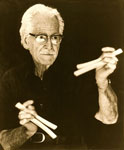
Percy Danforth

Bone playing was all the rage 150 years ago during the U.S. Civil War.

By the turn of the century, when Percy Danforth learned to play bones on the streets of Washington, DC., the Minstrel Era was drawing to a close and bone playing was fading away with it.

Then in 1976 his famous musical bones went into production. It is estimated that over thirty-thousand Danforth bones have been sold. Percy died in 1992 at the age of 92. His legacy continues...
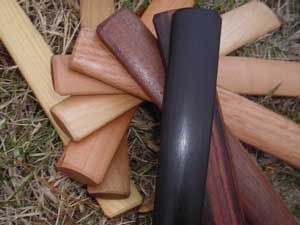

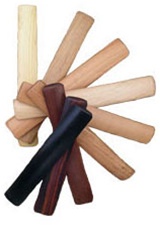
Clockwise from left: Pine, Hickory, Cherry, Maple, Virgin Maple, Oak, Walnut, Rosewood, Ebony


The Amazing Story of Percy Danforth Bones


Percy Danforth was largely responsible for the resurgence of bone playing in the U.S.

He was also a driving force in bringing back the two-handed style of play common during the minstrel era. Percy played with top folk musicians and professional classical musicians. He even appeared on stage at Lincoln Center and was labeled "A National Treasure" by the Smithsonian Institution.

Percy was something of a Johnny Appleseed of musical bones. He taught legions of folks how to play and eventually had so many students he needed a steady supply of high quality wooden bones. So in 1976 Percy came to Ray Schairer's workshop with a pinewood sample. Ray built a custom shaper and the Percy Danforth brand of musical bones was born.

The design of the bones is patterned after instruments used by 'Mister Bones' during the minstrel era. Ray still has the sample that Percy brought to the shop.
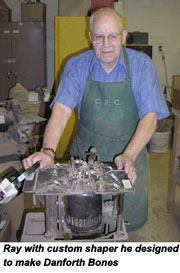

Ray SchairerRay Schairer: Master Woodcrafter
Percy died in 1992, at the age of 92. And after 30 years of making Danforth Bones, Ray continues to experiment with new woods.

For more than a quarter century Ray has turned out bones in the converted chicken coop on his farm that served as his wood shop. Discover the whole story about Ray Schairer--
Barefoot Boy
A Year in the Life of a 1930s Farm Boy


Virgin Maple Bones
One of the more interesting woods Ray discovered is virgin maple. The wood was harvested from virgin Wisconsin forests standing long before the Declaration of Independence was signed. The logs were recently discovered at the bottom of Lake Superior. They sunk over 100 years ago when the tree trunks were lashed together in huge rafts towed down to Chicago.

The frigid waters preserved the ancient wood in impeccable condition. The wood is very close grained and Ray says admiringly, "This is real wood. You don't often see wood like this anymore." The sound is different too, sharper and crisper than bones made from the same conventional woods.

Handcrafted Using Custom Wood Shaper
Danforth Bones are pretty much consistent in size and shape. But after emerging from the wood shaper they still must be worked by hand. "So they are not machine precise," explains Danforth's newest bonemaker, Sandor Slomovits, adding "there will be variation."

Postscript
In late 2008, after 32 years of service, Ray's custom wood shaper was replaced by a computerized machine - and the beat goes on...

Percy Danforth Bones and the New Millennium
Ray is slowly retiring from the bones business, and passing along the tradition to Sandor Slomovits. Sandor is a professional musician who learned to play bones from Percy. Percy was "The man who taught me everything I know about the bones," says Sandor. "The last time we played a concert together was at a senior citizens' Christmas party...and Percy, at age ninety, was still in great form." Percy died just nine days later.

Bone Dry Musical Instrument Co.
3916 Iowa Ave.
Saint Louis, MO 63118-4514
Contact
 About Us
 Become an Affiliate
 Privacy Policy
 Send Us Feedback