Bones FAQs A bone picking guide for the rest of us
Which Bones are Best for a New Player?
I think it makes practical sense for a new player to get a low-cost "starter" pair such as Joe Birl Bones. You will probably also want a second pair of some other kind of bones. Since Joe Birl bones produce a soft tone, my recommendation for a second pair are any bones in a medium tone wood. You can round out your initial collection by choosing a third pair made from a strong tone material. Equipped with this assortment, you can sample bones from the three basic tone groups (mild, medium and strong). You can view bones by Tone with the Bone Picker. The Tone by Density page helps you choose bones from mildest to strongest tones.
But like other things in life, if you ask ten different bone players what kind of bones are best for a new player, you will get ten different answers.
For example,
David Holt
demonstrates how to play bones using instruments similar to the natural ox rib bones I make and sell. Mine are expensive ($40+/pair) and I think they are too bulky and cumbersome for novice players. But folks have been playing natural rib bones since prehistoric times so they must be okay to learn on. What's more, the rib bones on David's video look homemade. And I think it is kind of cool to play a set of bones that were last night's dinner. Dave's video was made in 1996 and I have heard no complaints about it. But no matter. The shop now stocks Tim Reilly's Handcrafted Cow Rib Bones in sizes that will fit everyone's hands.
I do consider Joe Birl Bones toy-like. These are the bones with Joe's patented "easy grip" grooves. Well, my first set was a pair of Joe Birl bones - and I eventually developed into a skilled player. No, I do not play them much anymore. But my good friend Spike Bones is an expert player who absolutely adores them. I favor medium weight "flat" (i.e. less oval) bones such as Shooting Star and Whamdiddle for both new and advanced players. However, tens of thousands of people learned to play on Danforth minstrel style bones which are oval.
The Bottom Line Just about any bones are okay for a new player. The hard part is finding a teacher to help you play them. Better yet is finding someone who can show you different ways to play them.
Which How-To Video is Best for Me? Any of the videos below will help you get started. Either of the first two videos are perfect for new players. The second two are especially great if you want to learn to play jigs.
To Get You Started
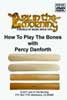
How to Play the Bones with Percy DanforthDVD
My hands-down favorite video for a beginning player is How to Play the Bones with Percy Danforth (former title: Mister Bones...). No other video offers such a comprehensive combination of insider tips, in-depth instruction on how to play various musical styles, plus first-hand commentary on the history of rhythm bones. This recording is more than 20 years old, yet it still remains the benchmark how-to bones video. The recording is clearly "dated," but a more comprehensive introduction to playing the bones has yet to be produced.
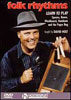
Folk RhythmsDVD The most entertaining how-to-play-the-bones video is this recording by David Holt. David represents five generations of bone players, and his distinguished career in traditional music began as a bone player. Besides being a delightful entertainer, David Holt is a natural and gifted teacher. Although the section on bones runs only around 7 minutes, the instruction is so clear and precise that you are sure to get a lot out of it. In short, the video is fun to watch, the teaching is top-notch, and you learn how to play five folk instruments (spoons, bones, washboard, hambone, paper bag).
To Learn Jigs and Irish Style
Bodhran and BonesVHS This video by Mel Mercier is around 15 years old and still the best place to learn how to play the one-hand Irish style. Mel is an accomplished musician, he sits on the Board of Directors of the Rhythm Bones Society, and he is one of the most warmhearted people you will ever meet. In 2011 Mel was awarded a doctorate in Ethnomusicology from University College Cork in Limerick. Mel was introduced to bones at an early age by his father, Peadar, who played bodhran and bones ten years with the famed Irish band, The Chieftains. Unfortunately, Mel's video has disappeared from the marketplace.
Bones From the BeginningDVD The training on this DVD is basic enough for the newest newbie, yet advanced enough to keep you coming back again and again for years. You start by learning the two basic grip holds. Then before you know it, you are cranking out taps and triplets and downbeats and upbeats alongside Aaron Plunkett, a multi-ethnic percussionist who appeared with the Irish band in the hit film, "Titanic." This is the most in-depth bones tutorial DVD on the market - more than one full hour of extensive hands-on instruction. So if you want thorough video instruction on how to play Irish jigs and reels in Aaron's two-handed American style, then get this DVD. All in all, this is an exceedingly rare and comprehensive, though rather pricey recording.
Be sure to take a peek at the Resources page to view the best how-to videos on YouTube plus other excellent resources.
Which Bones are Best for My Skill Level? Virtually any bones will work at any skill level. I recently met a classmate of my 11-year-old and gave him a set of Joe Birl wooden bones. Within a couple hours he put the Joe Birl "starter" bones aside and was happily clacking away on a set of "professional" black slate bones.
Should I Get Bones that Resonate Loud or Soft or Somewhere In-between? The legendary Percy Danforth would tell you to get pine. Although you can get Danforth bones in nine varieties of wood, Percy made it clear that he liked pine the best because it produces a relatively quiet tone.
Many players, including myself, prefer maple because it produces a nice warm tone. But I also enjoy playing bones made of all kinds of materials. And I like to mix and match them too. So it would not be unusual to see me play a wooden bone with a rib bone. Or sometimes a knife, fork or spoon - or even a pumpkin stem!
There are situations when you need to play loud. Other times you need to play quietly. I have seen the crowd go wild when the bones play relatively soft, then when the music calls for it, they rattle loud for effect. So I agree with many advanced players who recommend that you learn to play quietly, no matter what material you choose. So go get that set of resonant ebony bones if you want to, but your playing will shine when you can play them both soft or loud.
The Bottom Line Your choice of resonance is a matter of personal taste. So experiment, have fun, but learn to make those bones play both quietly and loud.
How Do I Adjust the Volume and Tone?
There are several ways you can adjust volume and tone with musical bones. These include "scissoring" the bones; choking the stationary bone way up high; playing 4 bones in one hand; moving the middle finger from the rail to the face of the bone.
Each volume and tone adjustment method mentioned above is demonstrated in this YouTube demo video.
Should I Learn to Play with One Hand or Two? The traditional American style is a remnant of the minstrel era
- which was playing flamboyantly with both hands (à la Mister Bones). By comparison, the traditional Irish playing style is more understated, and uses one hand. Neither style is better. But they are different.
Two-handed playing enables you to add more color to the sound. And two-handed playing can achieve syncopated beats that one-handed playing cannot.
One-handed playing enables you to perform intricate motions in an energetic (yet discreet) manner that two-handed playing cannot. For example, some hot-driving Irish tunes demand an intensity where a second hand just gets in the way and throws you off balance. At those times I draw one hand in and play only the dominant one.
How Do You play With Two hands? Here's how to play with both hands:
Once you get the hang of a lick with your dominant hand, then try it with your other hand. Try one hand alone, then try the other hand alone, then both hands at the same time. Then alternate one hand alone, then the other, then both. Keep doing that. It will come and it will go. Kind of like the first time you try riding a bike. You fall, then you coast a little bit, then you fall again. Eventually, with practice, you get better and better. The process never stops. Years from now, if you keep at it, you will amaze yourself with new techniques you keep discovering.
What is the difference between a Pair and a Set of Bones?
One pair equals 2 bones. That is what you need for one hand.
One set is composed of two pairs (4 bones). This is what you need for two-hand playing.
• 1 Pair = 2 bones: Enough for one hand.
• 1 Set (2 pairs) = 4 bones: Enough for two-hand playing.
• Full set (4 pairs) = 8 bones: 2 pairs for each hand.
A big thank you to long-time player Hank Tenenbaum who straightened me out on the difference between a pair and a set.
By the way, one set of Traditional Chinese Kuai Ban equals 7 clappers of course, but that's another story.
Which Bones are Best for Experienced Players? This online store is a candy shop for bone players. So unless you are looking for something in particular, why not treat yourself to a surprise! All the flavors are yummy, so don't be afraid to close your eyes and point. And if you cannot decide between "chocolate" or "strawberry," then just flip a coin. I have never met a set of bones I didn't like. So no matter what goodies go into your shopping bag, you really can't make a wrong choice.
WARNING: Players afflicted with BAD (Bones Acquisition Disorder) should disregard the above paragraph.
With few exceptions, musical bones are pretty much the same. After all, they are little more than a couple sticks you hold in your hand and shake back and forth.
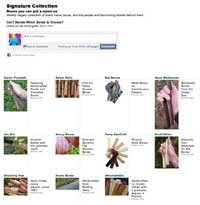
This store offers the world's largest selection of musical bones. Thank goodness picking through a cornucopia of bones is a task most players face with delight. But how do you sift through all the different kinds? The Bone Picker makes that job a real joy. It sorts bones by category so it is easier to find what you want:
What does that pair of cool-looking bones sound like? The best way to buy rhythm bones, of course, is to try them first-hand. Unfortunately, in the world of musical bones this is rarely possible. But now you can view demo videos that show you exactly what the bones at the store sound like.
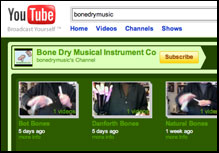
At least one demo video is posted at the store for Whamdiddle, Shooting Star, Danforth, Bot Bones, Natural Bones and Stone Bones. More are in the works. New demos are added periodically and hopefully these YouTube videos will get better as I gain more experience making them. And now, in addition to videos that demonstrate different kinds of bones, you can also see videos that show the bones in performance. You can view the complete playlists at YouTube. While there, just click the "Subscribe" button to get notified by email when new bones demo videos are posted. I invite you to post comments and your own video responses that might help fellow bone rattlers discover which bones are best for them.
Playing the Bones... Yours truly rattlin' away with marvelous musicians in various musical genres including Willow Creek (gospel & bluegrass), Carl Anderton (minstrel), Carolina Chocolate Drops (minstrel), Banjo Billy and friends (old-time), Bottoms Up Blues Gang (blues), "Blind Boy" Paxton (minstrel), Bones Fest XI (minstrel) and XIII (Irish), Christine Breen & Roger Netherton (old-time), Raw Earth (urban tribal), Gum Springs Serenaders (minstrel), Ed Yother (Irish), Rich Egan (ragtime), Jan Marra ("Brother Bones" style) and more... View Playlist
Bones Sightings... Bones sightings are movies and tv shows with bones playing. Bones sightings are extremely rare...and fun to discover! They're a little like finding an Easter egg. If you sight bones in a movie we can add to the list, please send a video link. View Playlist